By T.A. Leederman
On our podcast episode with Annie R McEwen some weeks ago, Annie and I really got going about eighteenth and nineteenth-century romance novels, and my old “haunts” have been much on my mind ever since. I probably should have known I would study the eighteenth century during my PhD, much earlier than I admitted to it; several teachers and mentors, in fact, later confessed that they knew I would be an eighteenth-century scholar before I did. Some things you have to slowly admit to yourself over time—like being bisexual, never having the patience to make sourdough, or hating camping—and this is just one of them.
Jenna and I were recently discussing the reasons for annotating books, and looking back through my copies of annotated scholarly editions like Evelina, which I acquired during my undergraduate studies for a seminar class on the early English novel, prove revelatory and spark interesting remembrances. If you, like me, eagerly read Jane Austen’s entire oeuvre—or at the very least, her published and completed six—then a journey through Fanny Burney’s Evelina is eye-opening. If my recommended Pamela is the first recognizable romance novel, and Pride and Prejudice sets the mold for what will come after, then Evelina (and other novels by Burney and her contemporaries) provide the bridge from Richardson to Austen.
This is less conjecture than it is a clear context of authors reading and building upon each other’s work. The Austens owned, read, and valued the works of both Richardson and Burney. When Burney set about to serialize her third novel, Camilla (a subject for another day), sixteen-year-old Jane Austen’s name is printed among the patrons. When Mr. Austen shopped Pride and Prejudice (then called First Impressions) to publishers, he compared it to Burney’s Evelina in his descriptions. Saying, however, that the Austen family owned and admired Burney’s works does not do justice to the profound and direct effect Burney had on Austen’s writing and plotting. I would argue, in fact, that Jane’s books would not exist in their current form without Frances Burney’s works. Without Burney, there is no Austen.
I believe I let out an audible gasp more than once when I read Evelina. It’s easy to think our heroes did something entirely original, and it feels strange to encounter something with which they were having such a deep conversation the entire time. College-me seems to ask, Why haven’t I ever read this? (College-me appeared stunned to make it to the ripe old age of one and twenty before reading Austen’s precedents. The scandal!) If Jane Austen had an author Instagram, she’d be fangirling Burney and eagerly sending you over to read her books. Or maybe not. Maybe she’d pull a Rowling, pretending obvious influences like The Worst Witch or Earthsea didn’t help to build Hogwarts… but I doubt it. The conversation between works like Northanger Abbey and Evelina, or between Pride and Prejudice and Cecilia, are too evident.
(The title Pride and Prejudice even comes from Cecilia, my favorite of Burney’s novels—another audible gasp moment, and yes, an article for another day.)
Burney’s first novel at the age of twenty-four, Evelina, or the History of a Young Lady’s Entrance into the World, released in 1778. It published anonymously in three volumes, and much like the novel’s Evelina herself—a beautiful figure of nebulous parentage on the London scene—the mystery of the book’s authorship sparked a great deal of buzz. Evelina is the legitimate but unrecognized daughter of a runaway beauty named Caroline, who married the then-libertine, Sir John Belmont. Belmont subsequently denied the marriage (this schmuck), and after Caroline’s death, Evelina came under the care of Reverend Villars as his ward. (It is my head canon that the name of Evelina’s father is drawn directly from the works of Samuel Richardson, who had not fewer than three important rakes and libertines in his books with a surname starting with B, including a Belford, a Belton, and of course, Pamela’s own Mr. B. The important figure of Robert Lovelace’s friend and correspondent in Clarissa, a fellow libertine, is named John Belford, and like Sir John Belmont, he is a reformed libertine by novel’s end. Yes, I know this sounds like a pants-on-head conspiracy theory, but hey… head canon is supposed to be whacky and fun. If it’s anything, it’s a knowing reference, plain and simple.)
The novel, to me, straddles two time periods in eighteenth-century novels and clearly links them together. In it, you can see the roots of one and the seeds of the other. It is epistolary, like Pamela, told in correspondence between the characters. Its title is reminiscent of Richardson’s works—particularly Clarissa, or the History of a Young Lady. (I would like to note here that, while I am discussing Richardson in the context of other romance novels because he wrote Pamela, Clarissa is a sentimental novel in this tradition, but it is not a romance. It gets to hang out in the corner being art. Okay? Okay.) Unlike a Pamela, however, Evelina sets the pattern of romance plots like those that would come after it, including Burney’s other works, and those of Edgeworth and Austen.
If you’ve read a bunch of Austen, Evelina just flat out rhymes; it has that comforting romance patter to it, a sense that everything will turn out okay, that all the perambulating details of the plot have a purpose, that all misunderstandings and loose ends will be sewn up neat and tight by the end. And they are. Evelina’s is an orderly universe, and all comes out right in the wash. Reading it reveals, in fact, some of the appeal of genre romance fiction in its nascent form. It seems to say to the reader that everything will be okay, that everything happens for a reason, that people will see good intentions and root out wrongdoing eventually, no matter what. Evelina makes her entrance into society, makes a number of embarrassing (but not too embarrassing, and largely innocent and amusing) faux pas, drawing the attention of two suitors: the modest and upstanding cinnamon roll Lord Orville (more on him later), and the confabulating dickhead Sir Willoughby. (YES, she even has a dickheaded Willoughby. You see what I’m saying, Austen stans?!)
(Reasons Why I’m Not in Academia Anymore, Reason #3486: I definitely wouldn’t be allowed to call a character in Fanny Burney’s Evelina a “confabulating dickhead” in my dissertation. [Looks around for a lightning bolt from Jenna.] Or at the very least, I’d have to hide it in a sneaky dissertation footnote that no one would read. [As opposed to putting it in the chapter text that no one would read.])
The Negatives: Of Burney’s heroines, Evelina is a little lackluster; she’s very sweet, but she lacks the self-defensive and faithful fire of a Pamela or a Clarissa, or the clever sparkle of a Lizzy or an Emma. Like many a first heroine, her real flaw appears to be her ignorance, a certain clumsiness with etiquette, born of tenderness and naivete. In other words, her flaw is easily remedied by education and time, and amounts essentially to a virtue. It shows the author’s inexperience and discomfort with making her FMC actually flawed (a thing we authors should all watch out for). There’s something weirdly comforting about seeing an author in her early twenties make this mistake all the way back in the eighteenth century. Some things really don’t change.
I would also call Evelina’s plot extremely tight—at times uncomfortably tight. (I know: that’s what he said.) While I’d prefer not to reveal the ending and the way things resolve, there’s a character Evelina meets with an issue conveniently cleared up at the same time as Evelina’s own plight, and while the resolution is tidy, I feel it’s a contrivance that amounts to a pile-on, and I wish Burney had handled this in a more naturalistic way. I believe Burney herself agreed, as Cecilia loosens up substantially (it’s much longer, for one thing), and develops its characters and their appearances more organically.
(Just as I found it difficult not to list into discussing my favorite Richardson novel while writing about Pamela, I now find I have to avoid discussing my favorite Burney novel while outlining Evelina. This is why it’s a pain being an iconoclast, folks.)
The Positives: I confess, the thing that brings me back to Burney again and again, and especially to Cecilia, is the strength of the male heroes. Burney has an incredible skill with her main men; they have a quiet gentleness, a steel and a real, modest humility to them, as well as quite compelling flaws. While Cecilia’s expressive Mortimer Delvile will always be my favorite of Burney’s creations, I remember liking Lord Orville better than most of Austen’s MMCs. It is clear to me when reading Northanger Abbey again that Austen had Evelina very much in mind when she wrote it, and that Henry Tilney is a Lord Orville-like character. Both novels are coming-of-age stories for young women who make a number of embarrassing mistakes early on, and both heavily feature Bath and its environs. Both Lord Orville and Henry Tilney help to educate the novel’s heroine, either to teach her what the world really is, or to disabuse her of what it isn’t. Northanger Abbey just has too much to do while it satirizes Gothic novels, and Henry Tilney never does quite live up to Lord Orville.
Jane Austen makes better use of Evelina’s themes when it comes to humiliation by proxy; both Lizzy and Evelina have embarrassing, status-grasping, and inappropriate family members and good reason to worry their love interests won’t respect them. Here again, however, Austen doesn’t make as good a use of the theme as Burney does, because while Evelina knows herself to admire Lord Orville and hence feels real chagrin at the behavior of her relations, Lizzy doesn’t believe herself in love with Darcy and doesn’t much feel the embarrassing actions of her family. This is realistic, of course, but it’s also less affecting for the reader. All this is to say, of course, that while Austen very much developed Burney’s ideas and transformed them into the blueprints for much romance that would follow, Burney also occasionally transmitted them in a purer or more clearheaded form.
If you count yourself as a big Austen lover and find yourself always wishing she’d written a bunch more novels, you really can’t go wrong picking up something by Burney. Grab yourself one of Jane’s favorites, one of her biggest influences, and read Evelina. If you read Austen over and over again, you will feel like you’re coming home. Trust me on that one.
Further Reading:
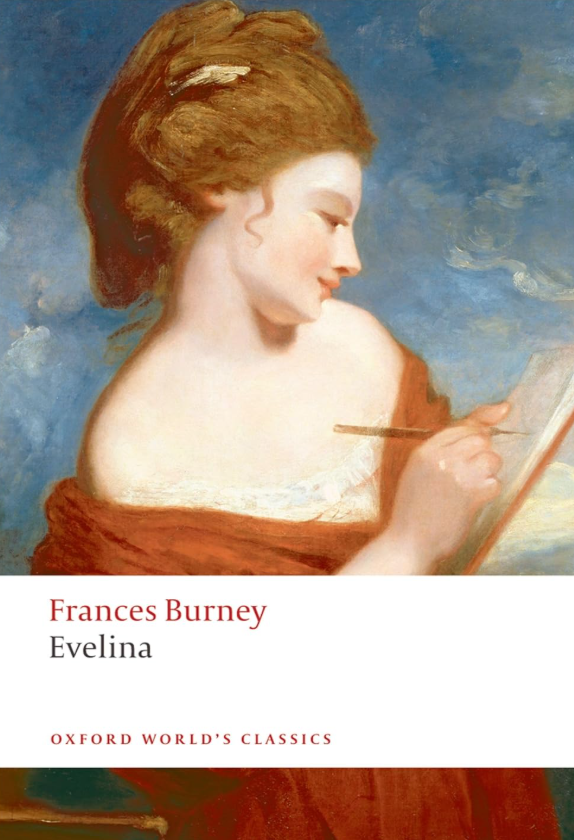
Burney’s Evelina is of course the thing I would direct you to, but I’d like to make the case for a particular version. I have and quite like the Oxford edition (you can grab yourself a used copy from any year, really). Why? Evelina is a novel about social niceties and etiquette, couched very much in people knowing what would and wouldn’t be acceptable as they were reading it. For those of us coming to the novel nearly 250 years later, that context and knowledge are gone, and the notes in the Oxford edition prove extremely helpful in orienting you. It’s also an easier paperback to handle and deal with than some of the cheaper editions out there, with a bit of heft, and less apt to fall apart on you.
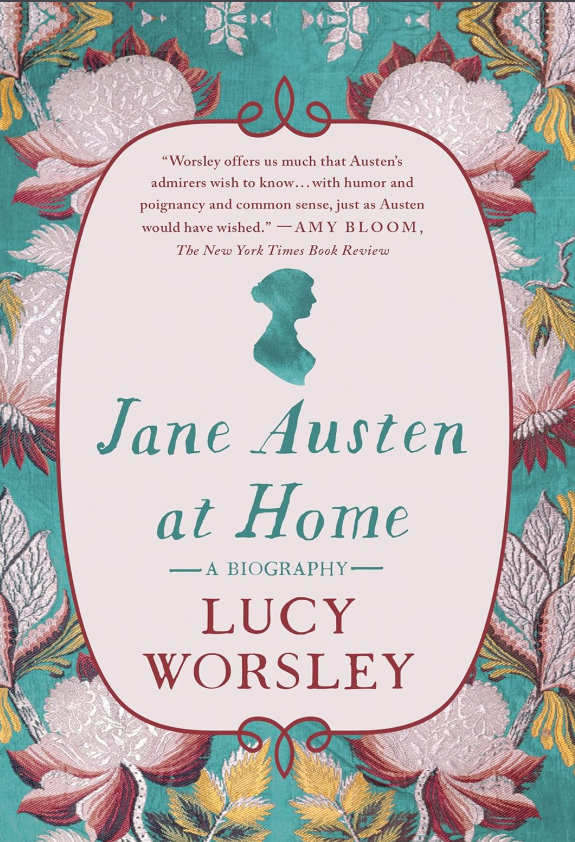
If you enjoy learning more about Jane Austen’s life and her relationship with the authors that came before her, you might like Lucy Worsley’s relaxed biography, Jane Austen at Home. This draws a fair bit from Jane’s correspondence (what we have of it) and other contemporaneous sources, and it’s just extremely readable.
Writing for Tender and Tempting Tales this week, is a PhD in English Literature who has authored science-fiction and sci-fi romance novels, as well as short stories for anthology collections. She is Social Media and Marketing Manager here at the press, doing copyediting, editing, and layout work for our collections. She is also Lore Manager and central fiction writer for Starship Valkyrie, a science-fiction crisis-simulator game and science-fiction IP, the world in which most of her works are set. She facilitates writing groups and programming locally for her area’s writing group (formerly a NaNoWriMo chapter), and volunteers on the board for Strategicon, a gaming convention in Southern California. Additionally, Tara co-hosts the T&TT podcast, Illicit Liaisons, with Jenna Harte. Check out our episodes here!
6 Responses
Great article I read with increasing interest. It made me realize i should check out and read a book (or books) on the literary history of the romance novel?
Of these, if you are familiar with them, which do you suggest as first in line?
~Pamela Regis’s A Natural History of the Romance Novel
~Janice Radway, Reading the Romance
~Eric Selinger and Sarah Wendell, Beyond Heaving Bosoms
~The Routledge Research Companion to Popular Romance Fiction
Hi Henry! Great question! I am most familiar with Regis, who is very romance-positive, in addition to making points familiar to what I’m saying here and in other “Romancing the Past” articles. I am also familiar with the Routledge Companion, though it can be a little dry, if I’m remembering it right.
Thanks, Tara.
In The Other Bennet Sister, Lizzy reads Evelina 🙂
Beautifully articulated essay, T.A. Leederman. I was reminded, in reading it, that I wrote a paper once on the books mentioned in Ben Franklin’s Autobiography and what they said about Franklin. I was stunned, in researching the paper, to discover that no one (at that time) had thought to do the same survey. What we read says much about us, and yet. . .My tastes are so catholic I hate to imagine what the books I’ve read just in the past year say about me. As to Evelina: at the risk of that lightning bolt finding its way to me, and of you hurling it, I dislike Burney. Why? Too many opinions to enumerate, none held so strongly that I care to. In summa, I find her writing pallid. That is probably indefensible as literary criticism and I don’t mean it to be taken as such. Putting snippiness aside, I wallowed happily in our Pond of Obscurity during my interview. I am available anytime to repeat. Cheers.
We all have our eighteenth-century author we dislike, however unpopular it feels to dislike them. Despite enjoying him as a legal mind, I greatly dislike the fiction of Henry Fielding. You should have seen me in classrooms from undergrad to PhD, railing against the man. Burney’s prose does pale in comparison to Austen or Richardson, especially in Evelina. I do love to read the things that influenced the writers I enjoy; seeing such a clear influence as Burney upon Austen interested me very much as an undergraduate. I also enjoy perceiving important “moments” in the development of a genre, I suppose–meeting the Mitochondrial Eve(s), as it were.
It was so fun getting to talk about things in our Pond of Obscurity! I don’t get to chat about little-known sentimental novels much anymore. We’ll have to do it again soon. Cheers!